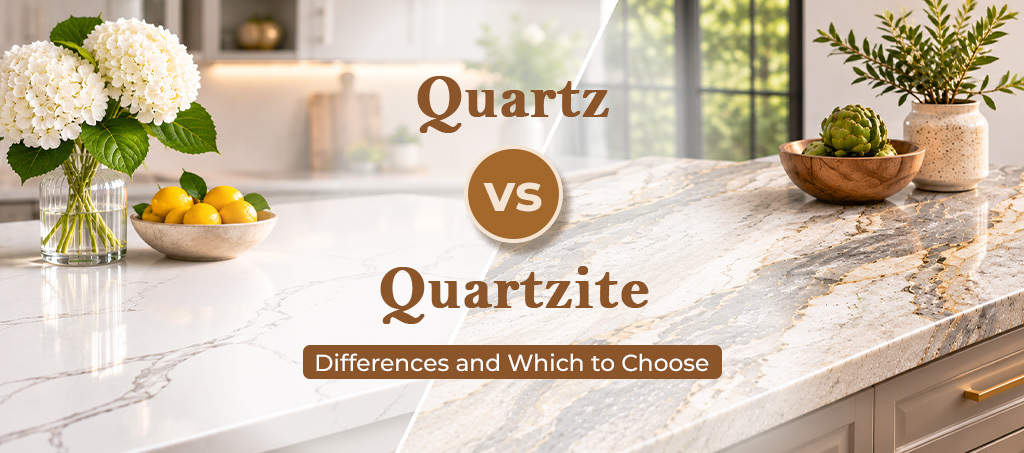
Quartz and quartzite sound nearly identical, and countertop shoppers mix them up constantly. The confusion is understandable. The names overlap, showrooms sell both, and some online articles treat them as the same thing. They are not. One is an engineered surface, and the other is natural stone.
This guide settles the quartz vs quartzite question in plain language. You’ll see how each material is made, how each performs in a real kitchen, and which one fits different homes and habits.
What is the difference between quartz and quartzite?
Quartz countertops are engineered surfaces made mostly from ground natural quartz bound with resins and pigments. Quartzite countertops are natural stone cut from slabs that formed when sandstone changed under heat and pressure. In short, manufacturers make quartz, and nature makes quartzite.
That single difference drives almost everything else: appearance, maintenance, heat tolerance and how consistent the slabs look.
How do quartz and quartzite compare side by side?
| Factor | Quartz (engineered) | Quartzite (natural) |
| Origin | Manufactured from stone particles, resin and pigment | Natural stone from the earth |
| Pattern | Consistent and predictable | Unique to each slab |
| Sealing | Generally not required | Usually recommended |
| Stain resistance | Strong because the surface is non-porous | Good when sealed |
| Heat | Can be damaged by very high heat | Generally handles heat well |
| Color range | Wide, including solids and designed patterns | Mostly natural whites, grays, creams and earth tones |
| Maintenance | Low | Low to moderate |
| Best for | Predictable look, easy upkeep | Natural character, heat tolerance |
This table gives general behavior. Specific products vary, so ask your fabricator for the manufacturer’s guidance on the exact slab you choose.
Which one lasts longer?
Both materials can last for many years in a typical household. Each one earns its durability differently.
Quartz durability
Quartz resists scratching and chipping well in normal use, and its non-porous surface holds up against daily wear. Its weak spot is heat. The resin in quartz can discolor or even crack if you set a very hot pan on it. Trivets solve the problem easily.
Quartzite durability
Quartzite is a dense natural stone that generally resists scratching and heat very well. Its weak spot is porosity. Unsealed quartzite can absorb liquids and show stains. A sealer and quick cleanup keep it in good shape. As our guide to white quartzite countertops explains, the quality of a quartzite slab also depends on how the stone is classified, so buy from a supplier who can explain what you’re getting.
Which one is easier to maintain?
Quartz wins on convenience. You clean it with mild soap and water, and you generally never need to seal it. Quartzite asks for a little more attention: periodic sealing and prompt spill cleanup.
Don’t overstate the gap, though. Sealing is a quick task, and many quartzite owners find the routine easy. If you cook often and dislike any extra upkeep, choose quartz. If you don’t mind an occasional seal in exchange for natural stone, quartzite works well.
Which one handles heat and stains better?
Heat: Quartzite tolerates heat better because it is natural stone. Quartz tolerates everyday warmth but can suffer from sudden or extreme heat.
Stains: Quartz resists stains well because its surface does not absorb liquids. Quartzite resists stains well when sealed, but it can absorb spills if the sealer wears off.
Sunlight: Prolonged direct sun can fade or discolor some engineered surfaces, so most kitchens with sunny windows are fine, but outdoor installs deserve extra scrutiny. Ask your fabricator before using either material outdoors.
How do the looks differ?
Quartz offers more variety by design. You can find solid colors, soft veining, bold patterns and even speckled looks. Because manufacturers control the production, slabs in the same color look much alike. That consistency helps when you need to match a long run of countertop.
Quartzite offers natural drama. Its veining, crystals and color shifts form organically, so no two slabs match. You can see natural variation clearly in popular white options. If you love the “one of a kind” idea, quartzite delivers it.
How much do quartz and quartzite cost?
Both materials span wide price ranges, so no universal rule says one always costs more. Quartzite often lands higher than basic quartz, but rare or premium quartz can cost more than common quartzite. Your final price depends on:
- The specific product and its grade
- Slab size and thickness
- Edge profile and cutouts
- Seams and layout
- Installation requirements
The most reliable move is to request a written estimate for each material. Start on the quote page.
Which should you choose? A quick decision guide
Use these scenarios to point you in the right direction.
Choose quartz if you want…
- Minimal maintenance and no sealing
- A predictable, consistent look
- A specific color, including bold or solid shades
- A family kitchen where simplicity matters most
You can explore the range on the quartz countertops page.
For color and pattern ideas, see our guide to quartz kitchen countertops.
Choose quartzite if you want…
- A natural stone with unique movement
- Better tolerance for heat
- The look of marble with generally stronger performance
- A statement island or focal surface
See the options on the quartzite page.
Still undecided?
Split the decision. Many kitchens use quartzite on a statement island and quartz on the perimeter, or the reverse. Ask a fabricator how the two materials would look side by side before you try it.
Common myths about quartz and quartzite
- Myth: Quartz and quartzite are the same. They are different materials with different origins.
- Myth: Quartz is natural stone. Quartz countertops are engineered. They contain natural quartz, but manufacturers combine it with resins and pigments.
- Myth: Quartzite never needs maintenance. It generally needs sealing and sensible care.
- Myth: Quartz is indestructible. It resists many problems, but high heat can damage it.
For more answers on materials, care and ordering, browse the FAQ page.
FAQs about quartz vs quartzite
Is quartzite better than quartz?
Neither is better in every situation. Quartzite offers natural character and strong heat tolerance. Quartz offers low maintenance and consistent patterns. Your priorities decide the winner.
Is quartzite harder than quartz?
Quartzite is a dense natural stone and generally very hard. Quartz is also durable in daily use. Both resist scratching well in normal kitchens, so hardness rarely decides the choice.
Does quartzite need sealing?
Usually yes. Your fabricator can recommend a schedule for your slab.
Can you put hot pans on quartz or quartzite?
Use trivets on both. Quartzite handles heat better, but protecting any surface is smart.
Which is better for a busy family kitchen?
Many families prefer quartz for its easy upkeep and stain resistance. Others choose quartzite and accept light sealing. Weigh your priorities honestly.
Which is more expensive?
It depends on the specific product. Compare written estimates for your layout.
Compare both in person
The quartz vs quartzite decision gets easier when you stand in front of real slabs. Touch the surfaces, compare the patterns in your light, and ask how each one handles the way you cook. When you’re ready, compare slabs in person with our team and leave with a clear plan.