
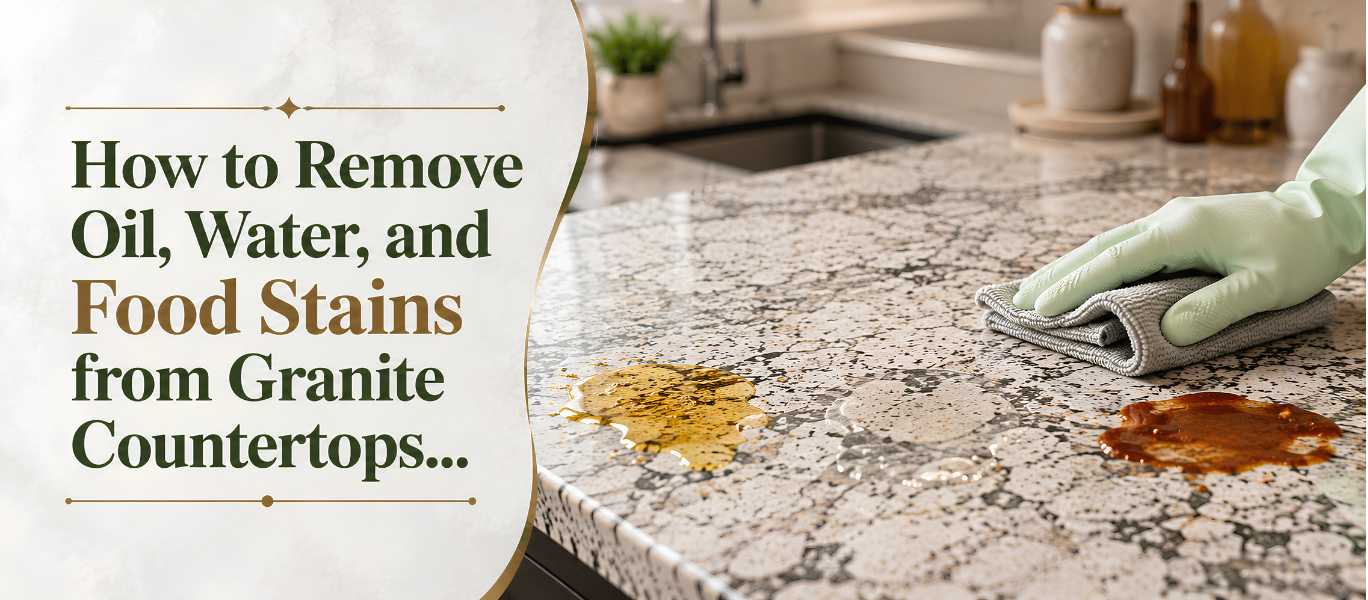
Granite countertops are pretty forgiving when it comes to everyday wear and tear, but stains are one thing that can catch even careful homeowners off guard. Whether it’s a splash of olive oil that sat a little too long, a coffee ring that dried before you noticed it, or a stubborn water spot that just won’t wipe away, granite stains happen more often than people expect.
The good news is that most stains on granite are completely fixable once you know what you’re dealing with. Different stains need different treatments, so let’s go through exactly how to tackle the most common ones.
Why Granite Stains in the First Place
Granite is a natural stone, and even with a good sealant, it’s still porous at a microscopic level. That means liquids can eventually work their way into the surface if they sit long enough, especially oils and pigmented liquids like wine or coffee. The sealant slows this process down significantly, but it doesn’t make your countertop completely stain-proof.
This is also why stains tend to show up more on countertops that haven’t been resealed in a while. If your sealant is wearing thin, liquids have an easier time soaking in before you get a chance to wipe them up.
When staining keeps happening despite proper care, it might be worth having a professional like Quality Granite USA inspect and reseal the surface.
How to Identify the Type of Stain
Before treating a stain, it helps to figure out what caused it, since the removal method changes depending on the type.
Oil-based stains usually look darker than the surrounding stone and tend to feel slightly greasy if you run your finger over them. Common culprits include cooking oil, butter, hand lotion, and makeup.
Water stains typically appear as dull, cloudy rings or spots, often lighter than the surrounding area, rather than darker. These usually come from standing water, wet glasses, or leaky appliances.
Food and organic stains are often caused by things like coffee, wine, fruit juice, or tomato sauce, and they tend to leave a colored tint on the stone that matches whatever caused it.
Once you know what kind of stain you’re dealing with, the right treatment becomes a lot clearer.
How to Remove Oil-Based Stains
Oil stains need a specific approach because regular cleaners just push the oil around instead of pulling it out of the stone.
- Make a baking soda poultice. Mix baking soda with a few drops of water until it forms a thick paste, similar to peanut butter consistency.
- Apply the paste directly over the stain. Spread it about a quarter-inch thick, covering the stain completely.
- Cover with plastic wrap. Tape down the edges of the plastic wrap to keep the poultice from drying out too quickly. This traps moisture and gives the paste time to draw the oil out of the stone.
- Let it sit for 24 hours. Patience is key here. The poultice needs time to pull the oil up and out of the pores.
- Remove the plastic wrap and let the paste dry completely. Once it’s fully dried and hardened, gently scrape it away with a plastic scraper or old credit card.
- Wipe the area clean. Use a soft, damp cloth to remove any leftover residue. If the stain is still visible, repeat the process; oil stains sometimes need two or three rounds to fully lift.
How to Remove Water Stains
Water stains are usually easier to deal with than oil stains and often clear up with a bit of patience.
- Try the simplest fix first. Sometimes water spots aren’t actually stains at all, just mineral deposits sitting on the surface. Wipe the area with a soft cloth and a granite-safe cleaner to see if it lifts right away.
- If it persists, try a mixture of water and a small amount of mineral spirits. Apply it to a soft cloth and gently rub the stained area in a circular motion.
- Rinse and dry thoroughly. Wipe away any residue with a clean, damp cloth, then dry completely with a soft towel.
- Consider resealing if water stains keep showing up. Frequent water staining can be a sign that your sealant is due for a refresh, so this might be worth checking with the water-drop test.
How to Remove Food and Organic Stains
These stains respond well to a similar poultice method as oil stains, though hydrogen peroxide can be a helpful addition depending on the type of stain.
- For light stains, start with a mix of baking soda and water. Apply as a paste, cover with plastic wrap, and let it sit for several hours before wiping clean.
- For darker or more stubborn stains, use hydrogen peroxide instead of water. Mix baking soda with a small amount of hydrogen peroxide to create the paste, then follow the same poultice method: apply, cover, wait, then wipe clean.
- Avoid using peroxide on darker granite colours. Hydrogen peroxide can occasionally lighten dark stone, so it’s best suited for lighter granite varieties like white or beige tones.
- Repeat as needed. Organic stains from wine or fruit sometimes require a couple of applications before they fully disappear.
What to Avoid When Treating Stains
- Don’t use vinegar or lemon juice. These are acidic and can etch the surface of granite, creating dull spots that are actually harder to fix than the original stain.
- Avoid abrasive scrubbers. Steel wool or rough scouring pads can scratch the surface, giving future stains even more surface area to grip onto.
- Don’t skip the plastic wrap step with poultices. Without it, the paste dries too quickly and won’t have enough time to actually draw the stain out.
- Avoid harsh commercial stain removers not made for stone. Many general-purpose stain removers contain chemicals that are too aggressive for natural stone and can damage the sealant.
Preventing Future Stains
Once you’ve dealt with the current stain, a few habits can help prevent new ones. Wipe up spills as soon as they happen, rather than letting them sit. Use cutting boards and coasters, especially for oily foods and acidic drinks like wine or citrus juice. And keep an eye on your sealant with the water-drop test every few months, resealing whenever water stops beading on the surface.
Final Thoughts
Stains on granite countertops are annoying, but they’re rarely permanent if you treat them the right way. Identify the type of stain first, use a poultice method for oil and organic stains, and keep your sealant fresh to prevent future issues. With a little patience, your granite countertops can look spotless again in no time.
And if stains keep coming back no matter what you try, reaching out to specialists like Quality Granite USA can help identify whether it’s time for a professional reseal or repair.
FAQ’s
1. How do you get oil stains out of granite countertops?
Oil stains can be removed using a baking soda poultice. Mix baking soda with water to form a thick paste, apply it over the stain, cover with plastic wrap, and let it sit for 24 hours before wiping clean.
2.What removes water stains from granite?
Light water stains often lift with a granite-safe cleaner and a soft cloth. For more stubborn spots, a mixture of water and a small amount of mineral spirits applied in circular motions can help remove the residue.
3.Can hydrogen peroxide be used on granite countertops?
Yes, hydrogen peroxide can help remove food and organic stains like coffee or wine when mixed with baking soda into a poultice. However, it should be avoided on darker granite, since it can lighten the stone’s colour.
4. Why does granite stain even when it’s sealed?
Granite remains porous at a microscopic level even after sealing. While sealant significantly slows down absorption, it doesn’t make the stone completely stain-proof, especially with prolonged exposure to oils or pigmented liquids.
5.Is it safe to use vinegar to remove stains from granite?
No, vinegar is acidic and can etch the surface of granite, creating dull spots that are often harder to fix than the original stain. A pH-neutral cleaner or baking soda poultice is a safer option.