Quartz countertops have become a favorite choice for modern kitchens and bathrooms. Their durability, elegance, and low maintenance make them stand out from other materials. But when it comes to selecting quartz, one of the most important decisions homeowners face is choosing the right thickness. The thickness of your quartz countertop affects not only its strength but also its appearance, cost, and installation.
In this guide, we’ll walk you through everything you need to know about quartz countertop thickness so you can make an informed decision for your home.
Why Thickness Matters in Quartz Countertops
When you think about a countertop, durability is key. Quartz countertops are strong, but the thickness you choose plays a big role in how they hold up over time. A thicker slab provides extra strength and is less likely to crack under pressure or heavy use.
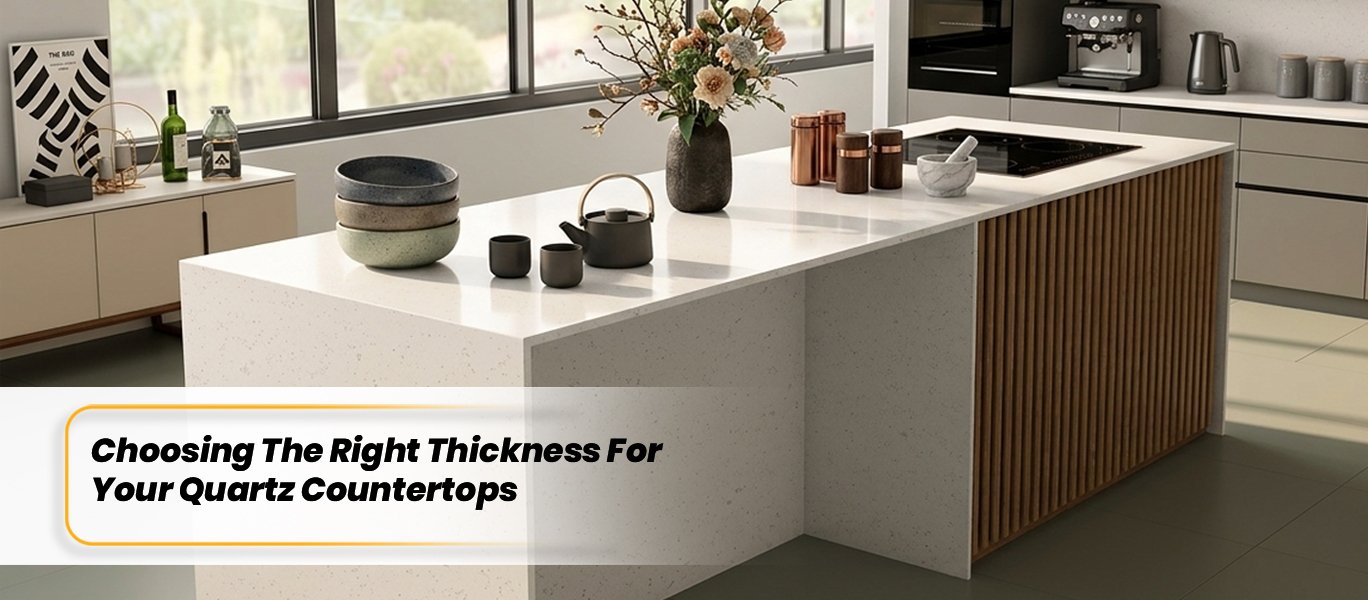
Thickness also affects the overall look of your kitchen or bathroom. Thicker countertops tend to give a luxurious, substantial appearance, while thinner slabs create a sleek, modern feel.
Additionally, thickness can influence cost and installation. Thicker slabs are heavier and more expensive, and they may require extra support in your cabinets. Knowing how thickness affects these factors helps you choose the right option for your needs.
Standard Quartz Countertop Thickness Options
Quartz countertops are available in a few standard thicknesses, and understanding these options can make your decision easier:
- 1.2 cm (1/2 inch) – The thinnest option, lightweight and cost-effective. Best for small areas or when you want a modern, minimalist look.
- 2 cm (3/4 inch) – The most common thickness, offering a balance between strength, style, and price. Works well for most kitchens and bathrooms.
- 3 cm (1 1/4 inch) – Thick and sturdy, ideal for a bold, luxurious design. Thicker slabs allow more creative edge profiles but are heavier and may require reinforced cabinets.
Choosing the right thickness also depends on your kitchen layout, countertop size, and design preferences.
Factors to Consider When Choosing Thickness
Before you pick a slab, consider these factors:
- Usage: If your kitchen sees heavy cooking and frequent use, a thicker quartz countertop provides more durability. For lighter use or guest bathrooms, a thinner slab may suffice.
- Cabinet Support: Thicker slabs are heavier, so your cabinets need to be strong enough to support them. Make sure your contractor checks cabinet stability before installation.
- Design Preferences: Thin slabs give a contemporary, floating appearance, while thick slabs offer a more traditional, substantial look. Your style choice can influence thickness.
- Edge Profiles: Thicker slabs allow for more intricate edge designs, like ogee or bullnose edges. Thinner slabs are more limited in edge styling.
When it comes to choosing quartz countertop, keeping these factors in mind will help you balance aesthetics, functionality, and cost.
Pros and Cons of Different Thicknesses
Understanding the advantages and limitations of each thickness makes the choice easier:
- Thin Quartz (1.2–2 cm)
- Pros: Lightweight, easier to handle, more budget-friendly.
- Cons: Limited edge design options, may require additional support for larger spans.
- Thick Quartz (3 cm+)
- Pros: Strong, luxurious appearance, flexible edge options.
- Cons: Heavier, higher cost, requires stronger cabinets and more careful installation.
Your choice should reflect your lifestyle, kitchen usage, and overall design goals.
Installation Considerations Based on Thickness
The thickness of your quartz countertop can affect installation. Heavier slabs may need additional support, and larger countertops may require seams, which can influence the visual appeal. Thin countertops are easier to maneuver but may need reinforcements in specific areas.
Working with an experienced installer ensures that your chosen thickness is safe, practical, and visually appealing. Installation quality matters as much as thickness in ensuring your countertop lasts for years.
Conclusion
Choosing the right thickness for your quartz countertops is a balance of strength, style, and cost. While 2 cm is a popular, practical choice, 1.2 cm suits minimalist designs, and 3 cm creates a bold, luxurious look.
Consider how your kitchen or bathroom will be used, the support your cabinets can provide, and the overall design aesthetic you want to achieve. By weighing these factors carefully, you can select a quartz countertop that is both beautiful and functional for your home.
If you’re unsure which thickness is best, consult with a professional installer or countertop specialist. They can guide you to the perfect option for your space.
FAQ
1. Is a 2 cm quartz countertop strong enough?
Yes, a 2 cm quartz countertop is strong for most kitchens and bathrooms, especially with proper cabinet support, and offers a sleek, modern appearance without added weight.
2. What are the benefits of a thicker quartz countertop?
Thicker quartz slabs (3 cm+) offer enhanced durability, a luxurious appearance, and more edge design options, making them ideal for high-traffic kitchens or bold design statements.
3. Does countertop thickness impact kitchen design?
Yes, thicker slabs create a bold, substantial look, while thinner quartz countertops offer a minimalist, modern feel. Thickness also influences edge design and overall visual proportion.
4. What is the standard thickness of a quartz countertop?
The standard thickness options for quartz countertops are 2 cm (3/4 inch) and 3 cm (1 1/4 inch), providing a balance of durability, aesthetics, and ease of installation.
5. Is a 2 cm quartz countertop strong enough?
Yes, a 2 cm quartz countertop is strong for most kitchens and bathrooms, especially with proper cabinet support, and offers a sleek, modern appearance without added weight.